


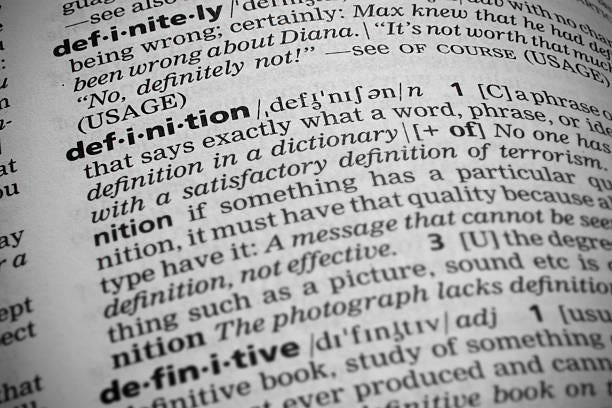
Celebrated the day of Noah Webster’s birth, Dictionary Day emphasizes dictionary skill, expanding vocabulary, and Webster’s achievements in publishing the first dictionary in American English in 1829. Dictionaries both serve as important reference works as well as showing the power of language and vocabulary. Far from static documents, dictionaries have continued to change and adapt since Webster’s first edition, adding new words, meanings, and definitions showing how language changes, terms change meaning, and human advancement leads to new terms gaining popularity or falling out of favor.
There are numerous types of dictionaries available, ranging from the general reference dictionaries that most people are familiar with to specialized dictionaries for different fields, etymological dictionaries, historical dictionaries, multi-language or translation dictionaries, rhyming dictionaries, synonym dictionaries or thesauri, slang dictionaries, reverse dictionaries, idiom dictionaries, phonetic dictionaries, and even satirical dictionaries. Even as the world increasingly seeks information online, dictionaries have made their home on the Internet, providing important information and context for readers around the globe.
Dictionary History
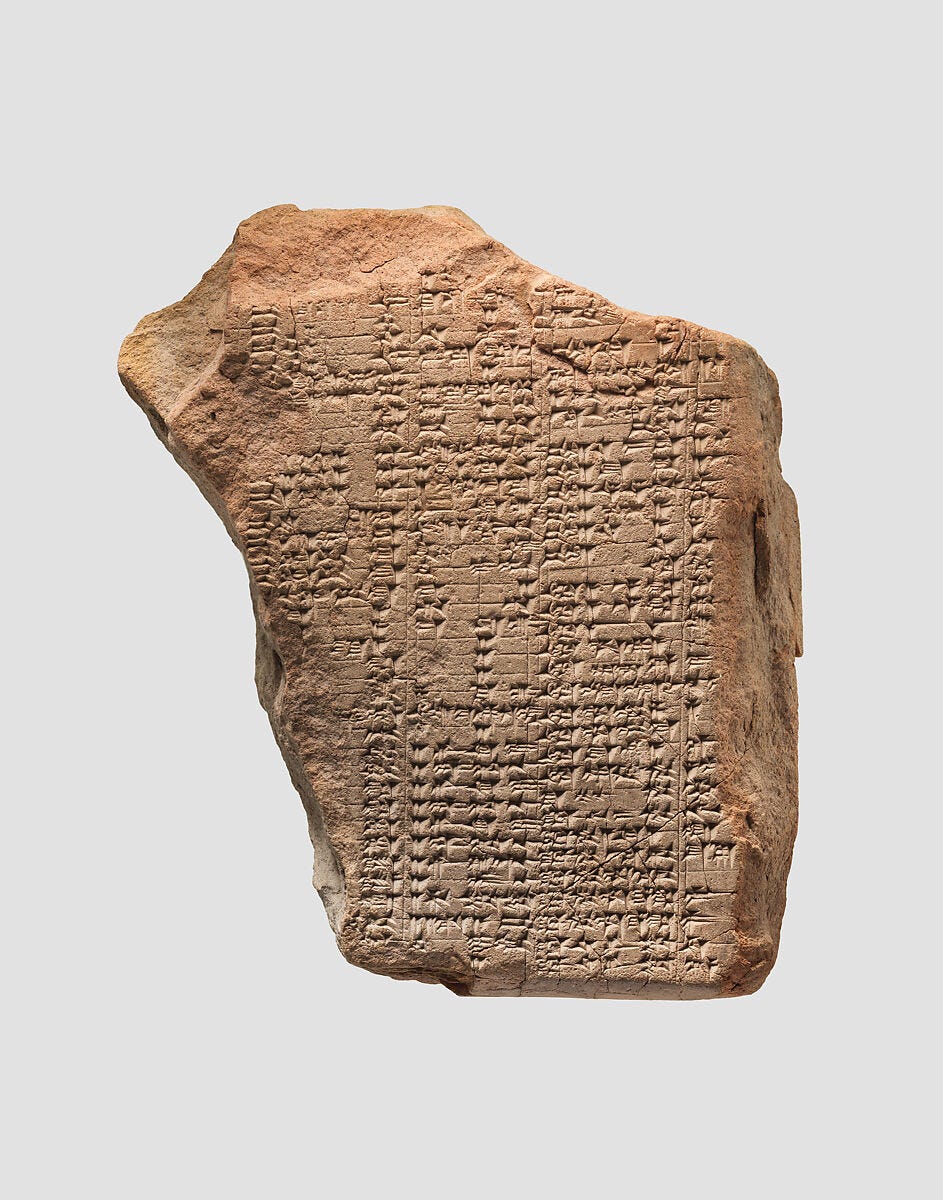
The earliest known dictionary ever discovered is a series of tablets known as the Urra=hubullu (List of Objects), which were 24 tablets written in cuneiform and showing Sumerian words with their Akkadian equivalents. Another version of this text was discovered translating Sumerian words into Hurrian from around the same period. The tablets date to sometime to around 2300 BCE and were possibly used by scribes. Lexical lists within the work include family lists with symbols and meanings; a table of measurements for converting items like grain, weights, and surface measures; lists of professional groups or occupations; a list of compound words ordered by complexity; a legal glossary; and basic school texts. The texts were discovered in Elba in what is now Syria.
The earliest known dictionary to come out of China was the Shizoupian (史籀篇) that is dated to sometime between 827-782 BCE, but only survives in fragments. It is believed this dictionary contained as many as 15 chapters and was allegedly compiled by the official court historian of Western Zhou King Xuan. The earliest surviving example of a Chinese dictionary is the Eyra or Erh-ya, which dates to the 200s BCE. The authorship of this book is unknown and it could be a later copy of an earlier book. The book was considered the authoritative lexicographic guide to Chinese classical texts during both the Han and Song dynasties and was officially categorized as one of the Thirteen Classics by Confucius.
Around the same time as the Eyra was being written, Greek soldier, poet, and scholar Philitas of Cos was writing Disorderly Words (Ἄτακτοι γλῶσσαι), a dictionary exploring the meanings, idioms, technical terms, and local dialectic phrases used primarily in the works of Homer but also in other ancient Greek texts. This work does not survive, but Apollonius the Sophist’s First Century Homeric lexicon does survive. In India, the first Sanskrit dictionary, the Amarakośa, was written around 300 BCE by Amarasimha in verse and featured some 10,000 words.
The first Japanese dictionary is the now lost Niina, which translated Chinese terms into Japanese. It was written about 682 CE. The oldest surviving Japanese dictionary is Tenrei banshō meigi or Tenrei banshō myōgi (篆隷萬象名義), which is a Japanese-to-Chinese langauge dictionary written during the Heian period. The earliest surviving dictionary in Irish, the Sanas Cormiac, contained both definitions and etymologies of more than 1,400 Irish words when it was written in the 800s.
Muslim conquests began to drive the need for translation dictionaries around this same period. Around the same time, the Persian-Aramic translation dictionary Frahang-i Pahlavig was written. By the 1100s, Turkic scholar Mahmud Kashgari finished a dictionary of Turkish dialects, the Divan-u Lügat’it Türk, which contained as many as 8,000 words to teach non Turkic Muslims – particularly Abbasid Arabs –t he Turkick language. The Kitâbü’l-İdrâk li-lisâni’l-Etrâk, written by Ebû Hayyân el-Endelüsî, served a similar function for the languages of Kipchak and Turcoman in Egypt and the Levant while the Bahşayiş Lügati was a translation dictionary including the languages of old Anatolian Turkish, Oghuz Turkish, Arabic, and Persian. By 1320, Amir Khurso had written the Khaliq-e-bari, which was a Hindustani-Persian translation dictionaries.
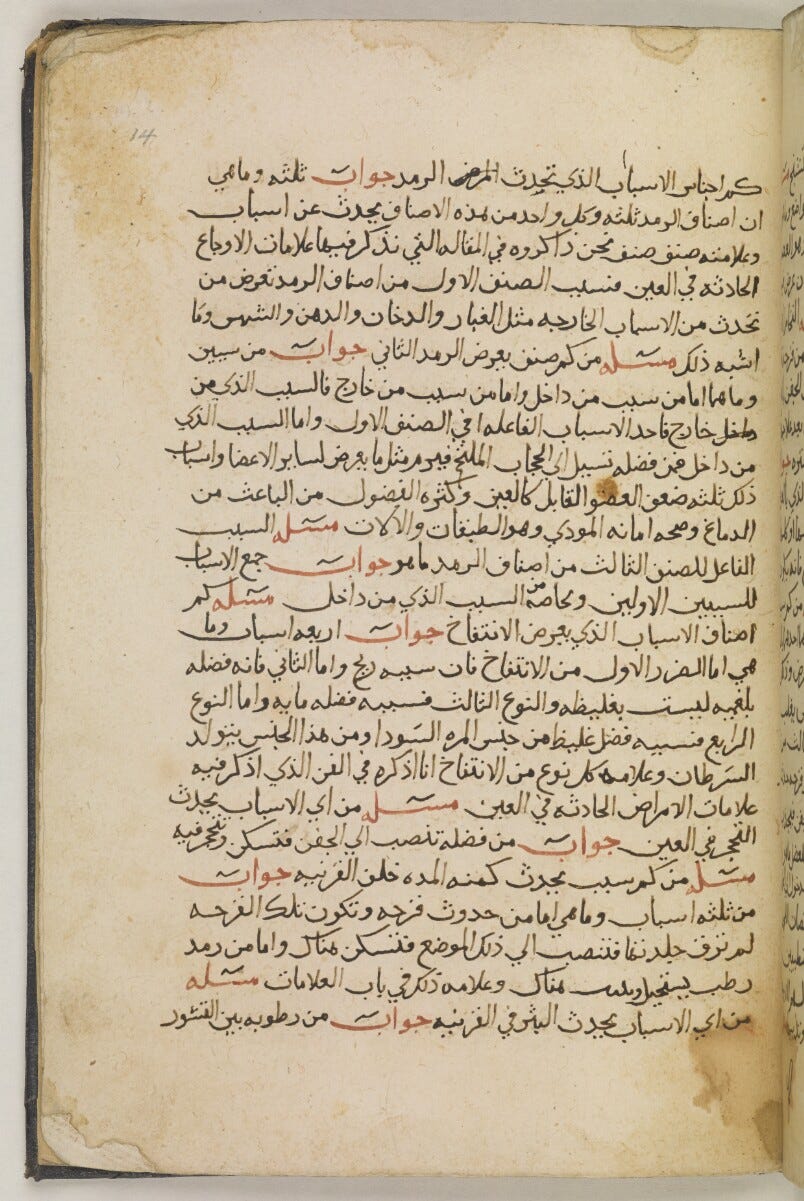
In the 700s, Al-Khalil ibn Ahmad al-Farahidi authored the Kitab al-’Ayn is considered the first dictionary in Arabic. It is also one of the earliest surviving dictionaries of any modern language with its title translating as “the source.” One of the features of the book was that it contained etymological roots of words that al-Farahidi researched, tracing the origins of various words in Arabic as well as an outline of phonetic pronunciation of each word. The original version had 26 books – a book for every letter in the alphabet. The book was rediscovered in 1914 and was introduced with the modern book being reprinted in new volumes as recently as 2003.
The Arabic dictionaries written during this period had various ways of organizing their entries with the most popular being in rhyme order or alphabetical order of the radicals or first letter. This was also when the development of specialist dictionaries began, particularly with dictionaries meant for use studying the Qur’an or hadiths. Others served as legal dictionaries for judicial officials or dictionaries of maths and sciences as part of the Islamic Golden Age.
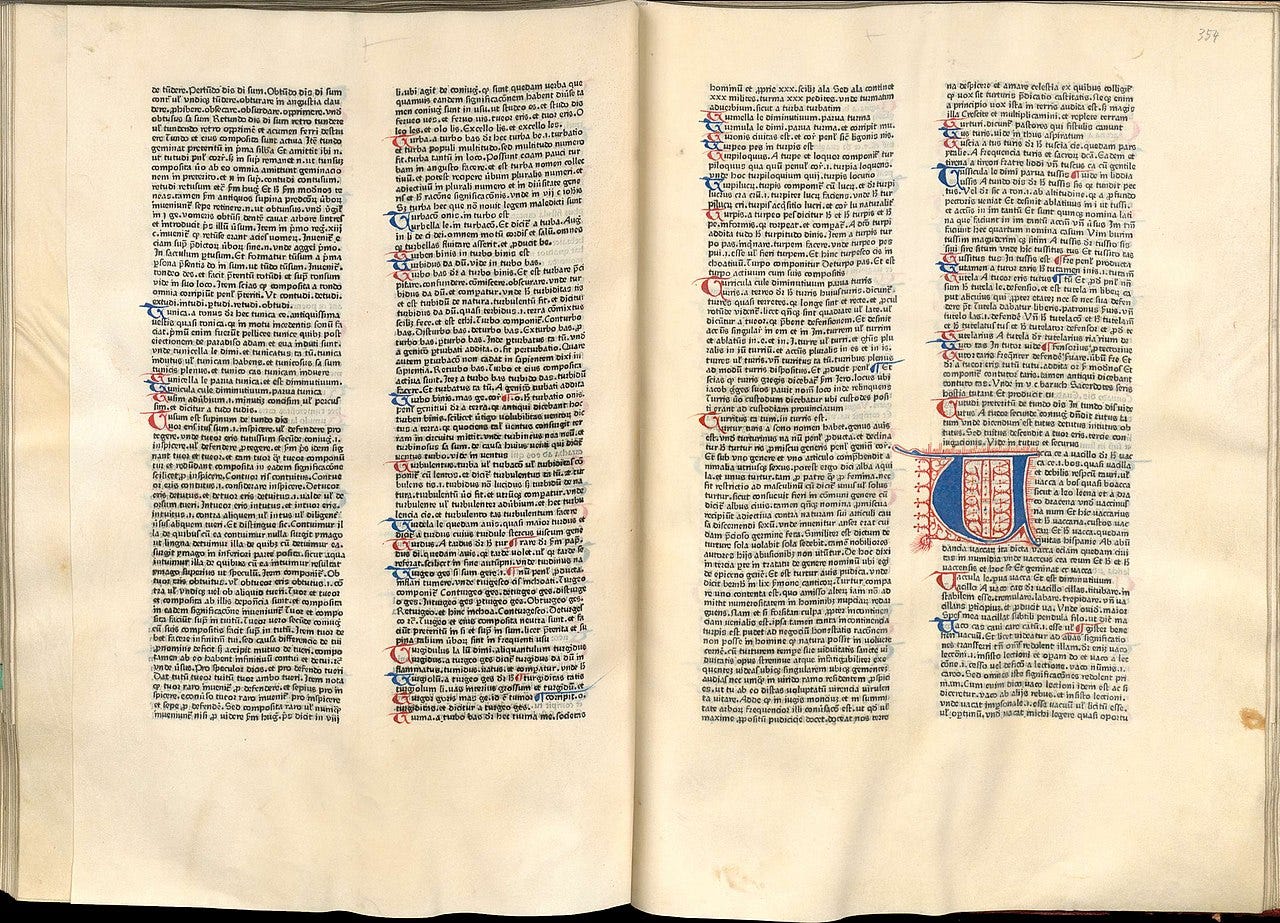
It was only when vernacular languages began to be used more in writing that a need for dictionaries started to take hold in Europe. The first dictionaries that emerged in Europe were translation dictionaries for vernacular words and Latin, most notably the Leiden Glossary that was brought to the Netherlands from England. In 1287, Johannes Balbus published The Catholicon, a large grammatical work featuring an alphabetically ordered lexicon that served as the basis for several vernacular dictionaries that came later and was one of the earliest books to be printed. In 1502, Italian Ambrogio Calepino published the Dictionarium, a monolingual Latin dictionary that was enlarged over the years to include terms from languages across Europe.
French printer Robert Estienne published the Thesaurus lingaue latinae in 1532, which his son Henri Estienne followed up with the Thesaurus linguae graecae 1572, one the earliest basis for Greek lexicography in Europe. The first Spanish language dictionary was Sebastián Covarrubias’s Tesoro de la lengua castellana o española, published in Madrid in 1611, while the first Italian-language dictionary was the Academia della Crusca’s 1612 Vocabolario degli Accademici della Crusca. Both of these works inspired similar works in French and English like the Antoine Furetière’s 1690 Dictionnaire Universal as well as the 1694 Dictionnaire de l’Académie française, which published its most recent and ninth edition in 2021.
English Language Dictionaries
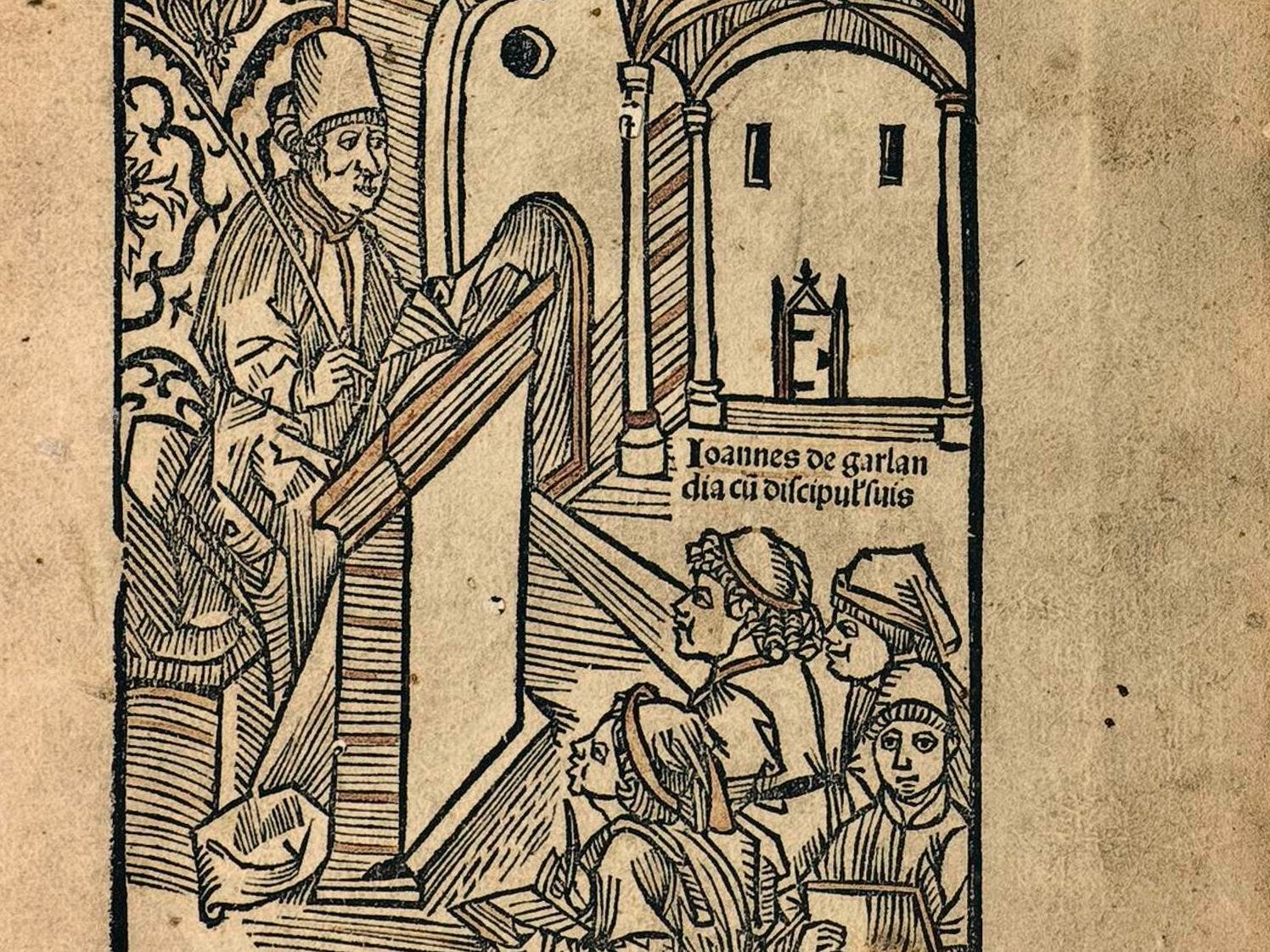
The term dictionary was introduced to the English language in 1220 by John of Garland to describe his book Dictionarius. Rather than offering lexicographical definitions, this book was a guide to Latin diction and pronunciation. Most early texts that could be considered English dictionaries were translation dictionaries between Latin or English and other European vernaculars, particularly French and Spanish – similar to other similar texts being published across Europe at the time.
While Samuel Johnson is often credited as creating the first English language dictionary, there were actually several early dictionaries published before this 1755 volume. The first was Sir Thomas Elyot’s 1538 Wordbook, a Latin-English dictionary dedicated to Henry VIII. A second volume followed in 1542 with even more entries. Richard Mulcaster published Elementarie, a non-alphabetical list of 8,000 English words, in 1582. Mulcaster was the headmaster of the Merchant Taylor’s School in London and while this text is not considered a true dictionary, it was an important forerunner to Johnson’s work.
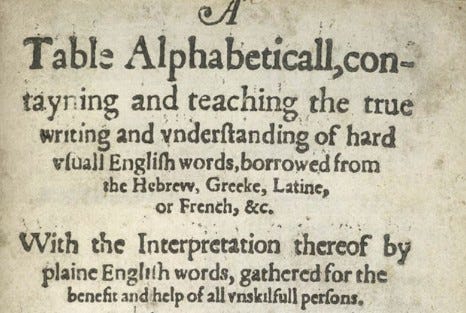
The book that is considered the earliest, alphabetically organized English-language dictionary was Robert Cawdrey’s 1604 A Table Alpbaheticall, whose only surviving copy is housed as the Bodleian Library in Oxford. Cawdrey was a schoolteacher whose work was very simple and direct but contained 2,500 words, each with a brief description and synonym. It was only around 120 pages long and its purpose was to define more uncommon or obscure words that were entering the English language because of the advent of printing, particularly with the first circulation of English language bibles. It was intended to help uneducated and unskilled persons learn the meanings of these terms.
In coming years, other dictionaries would copy or even outright plagiarize Cowdrey’s work. Often imitated and far from complete, A Table Alpabeticall was still the primary English language dictionary in 1754, which was lamented by Philip Stanhope, 4th Earl of Chesterfield, who was Johnson’s patron when he began his dictionary project. Other dictionaries published after A Table included Thomas Blount’s 1656 Glossographia, which defined 10,000 unusual words in the English language and was the first English language dictionary to include etymology, and Edward Phillips’ The New World of English Words, or A General Dictionary, published in 1658. The New World was double the size of Glossographia, but also highly plagiarized the work, requiring Phillips to publish A World of Errors Discovered in the ‘New World of Words’ in 1673.
Johnson and Webster
By the 1700s, many British printers and scholars lamented the lack of a complete dictionary of the English language. No one publisher could afford to hire an author or multiple authors to complete such a task, so a group of the most influential and prominent printers – including Robert Dodsley and Thomas Longman – banned together to finance the project. In 1746, they hired scholar and writer Samuel Johnson to undertake the project. The following year, Johnson submitted his Plan of A Dictionary in the English Language, laying out his intentions and methodology for organizing and writing the massive document and received the further patronage of Philip Stanhope, Fourth Earl of Chesterfield for the project. However, the relationship between the two would be fraught.
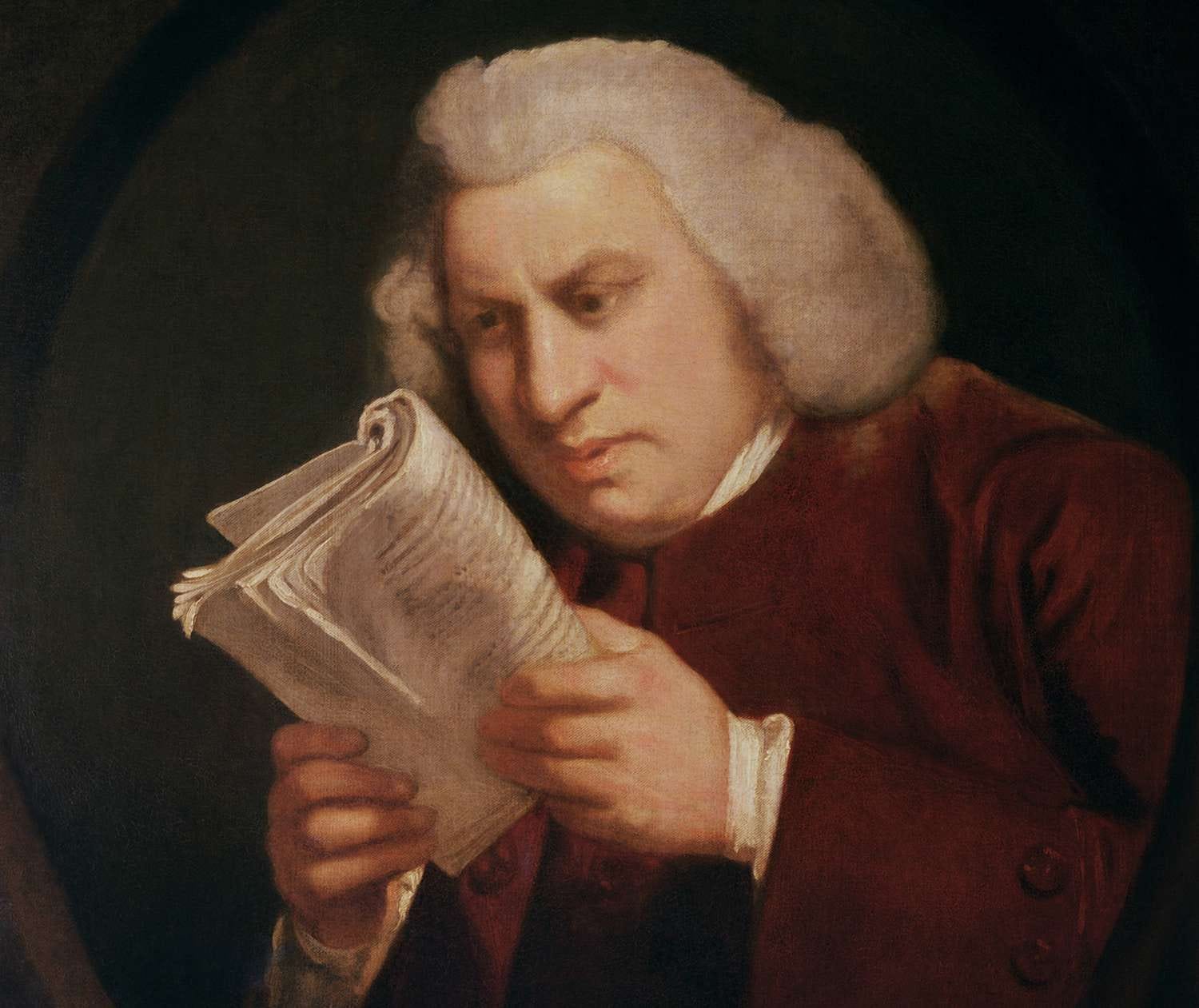
Johnson wrote the new dictionary single-handedly with only some minor clerical work in copying illustrative quotations. While Johnson had initially promised the book in three years, it was more than a decade before it would be published with the first edition going to print on April 15, 1755. Johnson would issue several revised editions during the course of his life. The book became so famous and so dominant in the public culture and consciousness that many believe it was the first English dictionary ever written. It would also be the primary dictionary by English speakers around the world until the Oxford English Dictionary was produced 173 years later.
Produced by the Oxford University Press (OUP) at the University of Oxford, the first edition of the Oxford English Dictionary was produced in 1884 and notably traces the historical development of the English language as well as comprehensive definitions, pronunciations, and research aids. Work began on the Oxford dictionary in 1857, but like Johnson’s dictionary, it would take several years to publish. Supplemental texts to the dictionary was published until 1928, when a new edition was created. More supplements continued until 1989, when another new edition was published. today, this remains the most prominent dictionary of English.
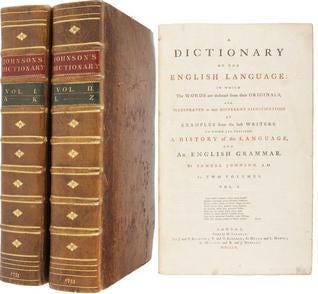
However, these English dictionaries published in the UK soon no longer met the needs of English-speaking Americans as American English had continued to evolve and change beyond what was spoken back in the UK. Enter Revolutionary war veteran, lexicographer, political writer, and textbook and spelling pioneer Noah Webster. A graduate of Yale with a master’s degree, Webster turned to literary work after several other failed careers and wrote prominently in favor of the American Revolution. As a teacher, he authored his own spelling and grammar book for his students and the blue-backed spelling tome began to be adopted by many other educators across the country.
Webster’s idealist view of an American independent not just from the government of England but also the cultural influence of Europe intertwined with his love of words. He intended for his spelling text to serve as a foundation for American nationalism and advocated for spelling reform to further separate American English from British English. Feeling textbooks imported from England were also unsatisfactory to American needs, he began writing his own including a spelling book published in 1783, a grammar in 1784, and a reader published in 1785, all of which put an American twist on traditional education.
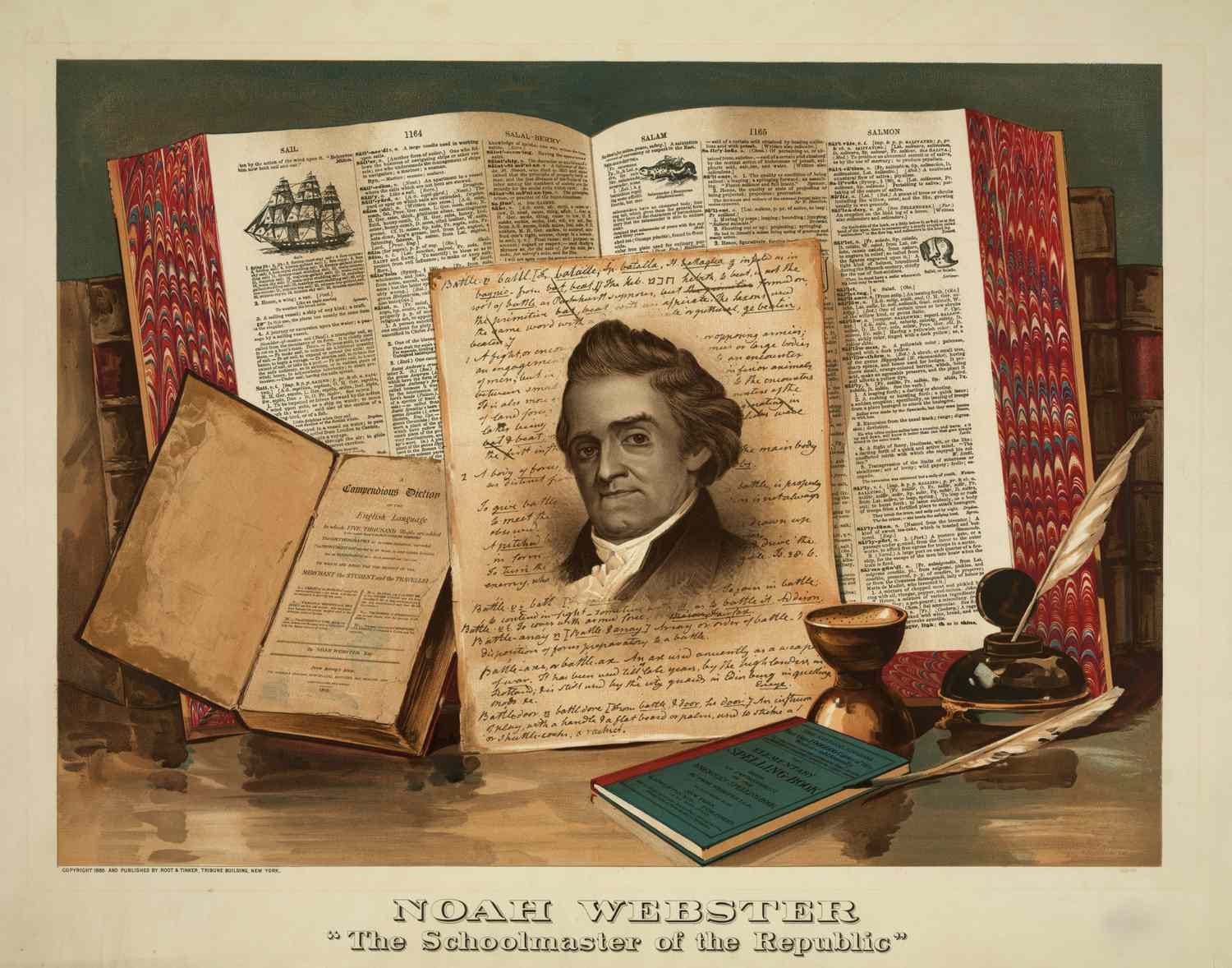
Webster’s dictionary was an outgrowth of his American nationalist politics, belief in spelling reform, and desire to center American culture in education. His first dictionary was published in 1806, but by the following year he was working on a more extensive volume that would take him 26 years to publish. He learned 28 languages to better understand the etymologies and origins of word and also worked on pronunciation guides and standardized spellings that would separate American English from British English. The 70,000-word dictionary was finally published in 1825, containing some 12,000 words never appearing in a published English dictionary before. While Webster himself didn’t solely invent all of the spelling changes between American and British English, he did play a significant role in why these spellings were adopted.
After Webster
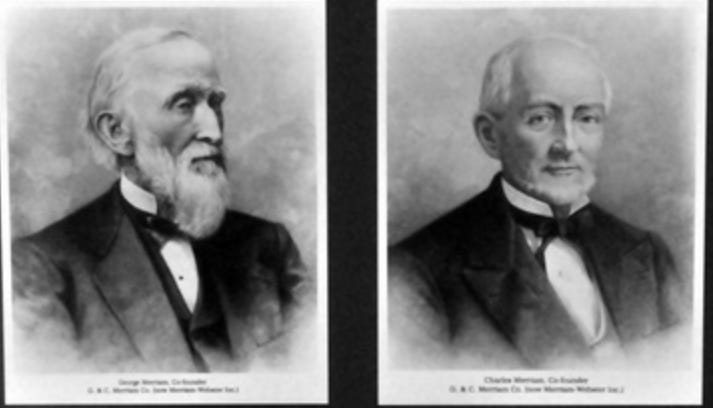
The dictionary left Webster with debts for the rest of his life, and he died largely unrecognized for his efforts. It wasn’t until brothers Charles and George Merriam acquired the rights to the publication in 1843 after Webster’s death that the newly titled Merriam-Webster dictionary became the standard dictionary for American English. However, just because a dictionary has Webster’s in the name doesn’t mean it’s a Webster’s dictionary.
For example, the Webster New World Dictionary initially published in its first edition in 1951 is unrelated to the Merriam-Webster Company as are the Webster’s Unabridged dictionaries published by Random House. The first dictionary published with Webster’s name but without his input or licensing actually came the year after the publication of his initially dictionary when a former assistant and later chief competitor, Joseph Emerson Worcester, bridges an abridged version of the dictionary. When Webster died in debt in 1843, the writers to the name Webster as well as his unsold books and copyrights were bought by Merriam, but the use of Webster’s name in revisions of his work as well as expansions on it muddied the legal waters.
Successive courts ruled by 1908 at the name Webster’s entered the public domain in 1889 when Worcester’s initial unabridged dictionary did as legal action had not been pursued at that time. A further ruling in 1917 ruled that Webster’s had actually entered the public domain in 1834 when Webster himself had led the copyright lapse. As a result, Webster came be used as a genericized trademark by anyone in their own works, despite work by the Merriam-Webster company to remind others only they are the true heirs to his work. Even the online and digital Encarta dictionary and encyclopedia was able to rebrand itself to Encarta Websters as a result of this trademark dispute.
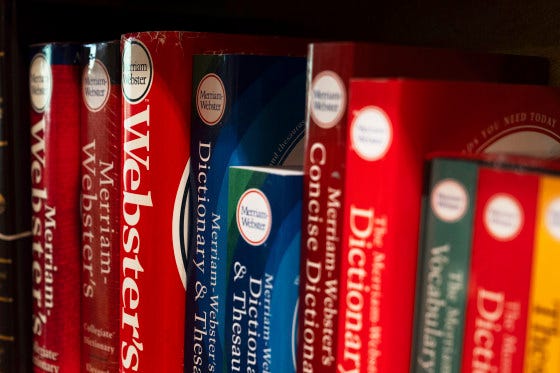
Ironically, the Merriam-Webster dictionary rights were acquired by the Encyclopedia Britannica in 1964, which likely would have infuriated Noah Webster himself who advocated for separation between American and British English. The third edition of Merriam-Webster, published in 1961, also spurred controversy when it lacked usage advice, prompting the publication of the rival 1969 American Heritage Dictionary using corpus linguistics and beginning an American dictionary rivalry.
One legacy of Webster’s is showing their is a market for English-language dictionaries that do not following British English spellings, definitions, or etymologies. As a result, some of the most popular major English-language dictionaries today include the Canadian Oxford Dictionary and Macquarie Dictionary of Australian English. Dictionaries have also gone online in recent years, allowing for users to not just look up words but combine several types of dictionaries, such as synonym and antonym dictionaries, into one function without the need for expensive printing.
I've never seen Sir Thomas Elyot mentioned in a Substack before. Congrats!