


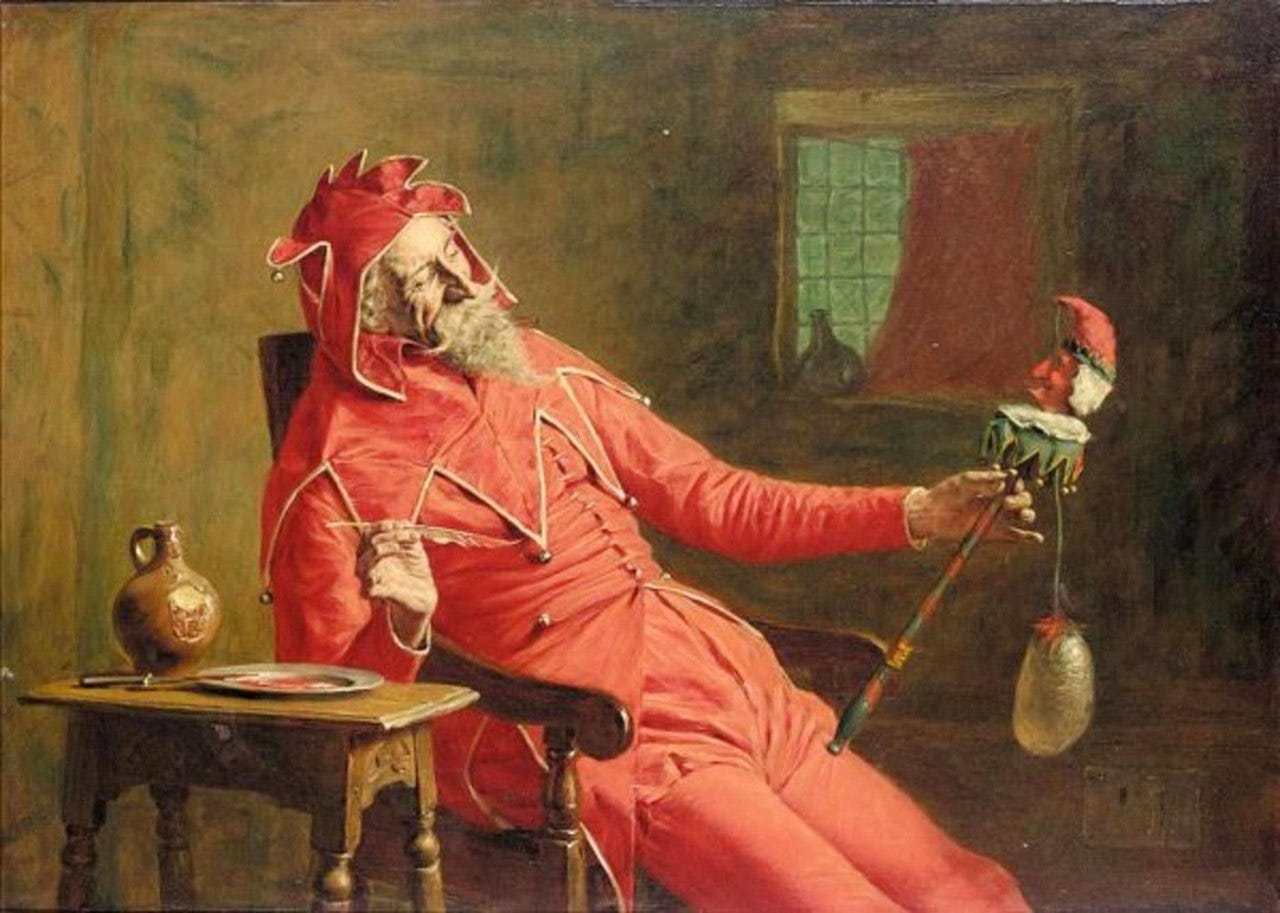
From the dumb blonde to the village idiot to the town drunk to the court jester to the foolish character that often spouts wisdom ignored by the other characters, the role of the fool in literature has worked to provide comic relief, subvert ideas about intelligence, and even create a sense of the sinister, macabre, bizarre and even melancholy. The fool is often a satirical character who says one thing but might mean another, the person who can tell the truth because they have a mask to hide behind.
Just like the fool in literature often has a dark side, there is a dark side to this archetype as well. Fools and jester characters have often been used as racist tropes and stereotypes, creating and reinforcing incorrect rhetoric about certain groups of people based on their religion, race, or ethnicity. Fools are also often displayed as mentally and physically disabled or characters with sincere medical issues like alcoholism. Jokes about everyone from Polish immigrants to blondes to African-Americans have been used as part of the cultural lexicon because of the archetypes created in literature. As a result, fools are a character much more complex with a much more intricate legacy than their role as the simpletons of literature might suggest.
Historical Background
The concept of both the literary fool and the occupation of a fool or jester goes back to ancient times. In The Characters, Aristotelian student Theophrastus laid out the first concept of stock characters and the first character study as well as the first character sketch. Several of the 30 archetypes he laid out can be seen as precursors to the modern day fool, such as the “Hapless Man,” “Absent-Minded Man,” “Superstitious Man,” and “Coward.” These character archetypes may have been drawn both from Greek literature as well as actual Athenians who lived at the time.
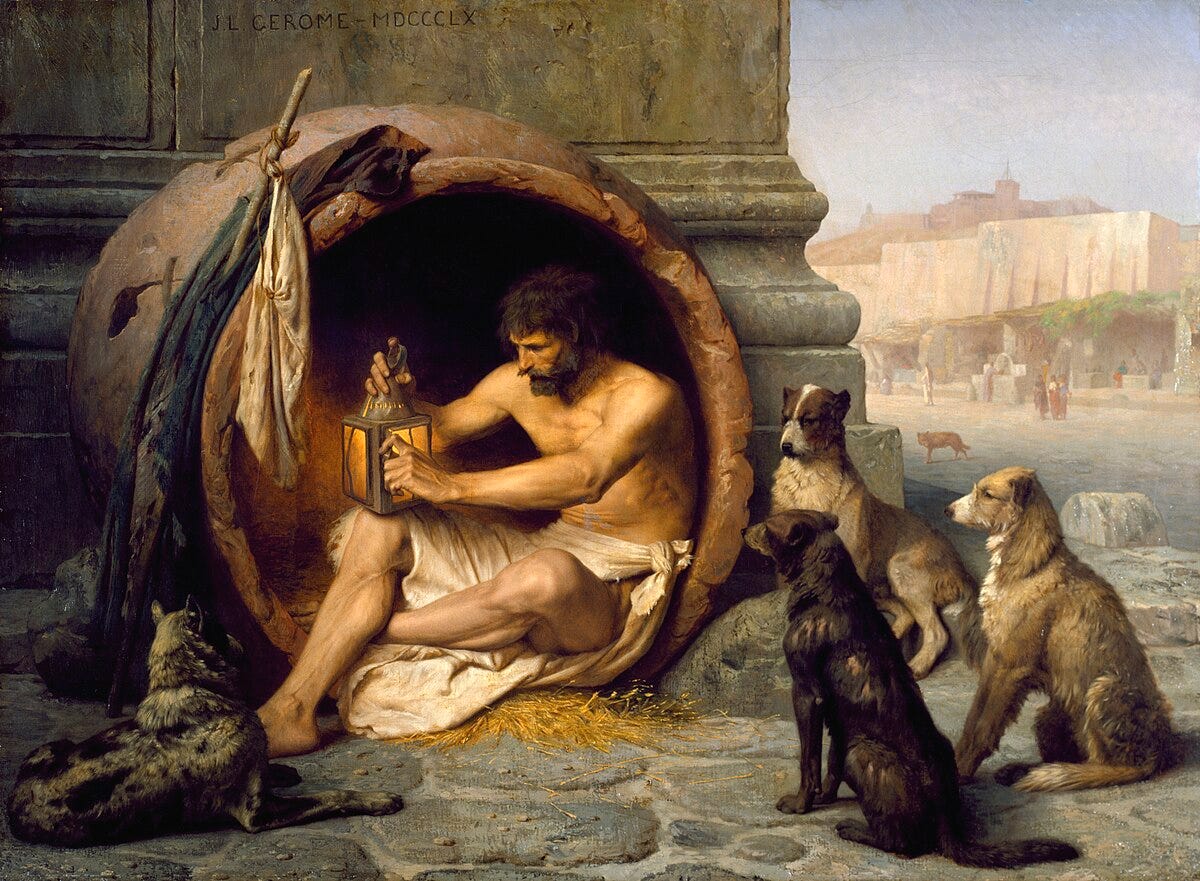
One such Grecian may have been Diogenes, a philosopher known for its antics as much as being a founder of Cynic philosophy. Diogenes had a reputation for sleeping and eating where ever he could, particularly in a large ceramic jar in the Athenian marketplace. He was known for philosophical stunts like carrying a lit lantern around in the daylight to help him find “an honest man” and presented a plucked chicken as a human being to point out the flaws in another philosopher’s categorization of a human as a “naked biped.”
Later on, the Roman playwright Plautus to create his own stock characters for the traditional Roman stock characters. This included the servus stultus or “stupid slave” and parasitus or the hanger-on, both of whom served as the fool character and as the comic relief. At the same time, the fool was a profession in both ancient Rome and ancient Egypt. The Egyptian pharaohs were among the first to have jesters that served as professional royal entertainment while the ancient Romans has the balatrones. A balatro was paid for jests and were often invited to dinner parties in ancient Rome to keep them interesting. The term may have come from a Roman figure named Servilius Balatro who was a buffon identified by Horace, though later writers like Festus claimed the term originated because these early jesters often covered themselves in mud or blateae.
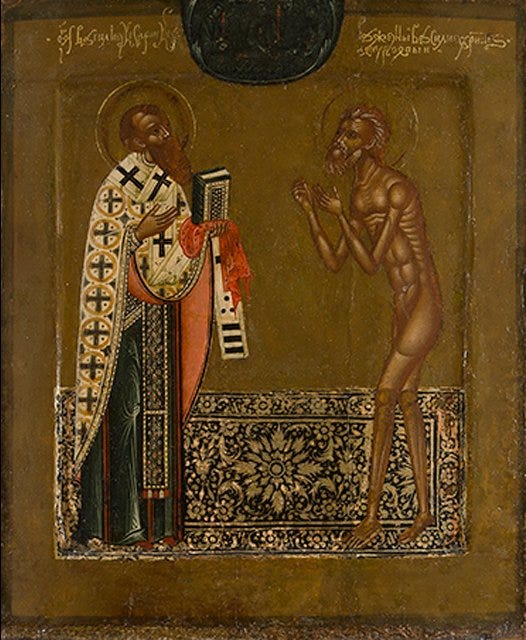
The emergence of Christianity prompted the growth of the “holy fool,” a term often referring to those who gave up all their possessions and flouted societal conventions to serve a religious purpose. Common in Eastern Orthodox Christianity, this concept is also seen in the Sufi traditions of Islam and the Avadhuta of India. The idea of the holy fool goes back to the prophets Isaiah and Ezekial and was continued with figures like the Apostle Paul, St. Francis of Assisi, St. Juniper and the Russian yurodivy.
These Holy Fools are commonly seen as figures who are homeless, often naked and starving and who speak in riddles and may have visions or tell prophecy based on religious wisdom given to them in exchange for their madness. A tradition started in ancient Byzantium, this tradition continues in the Eastern Orthodox faith through figures like Isidora Berankis, St. Procopius, and St. Basil - also known as Basil Fool for Christ - who inspired the legendary cathedral in Moscow.
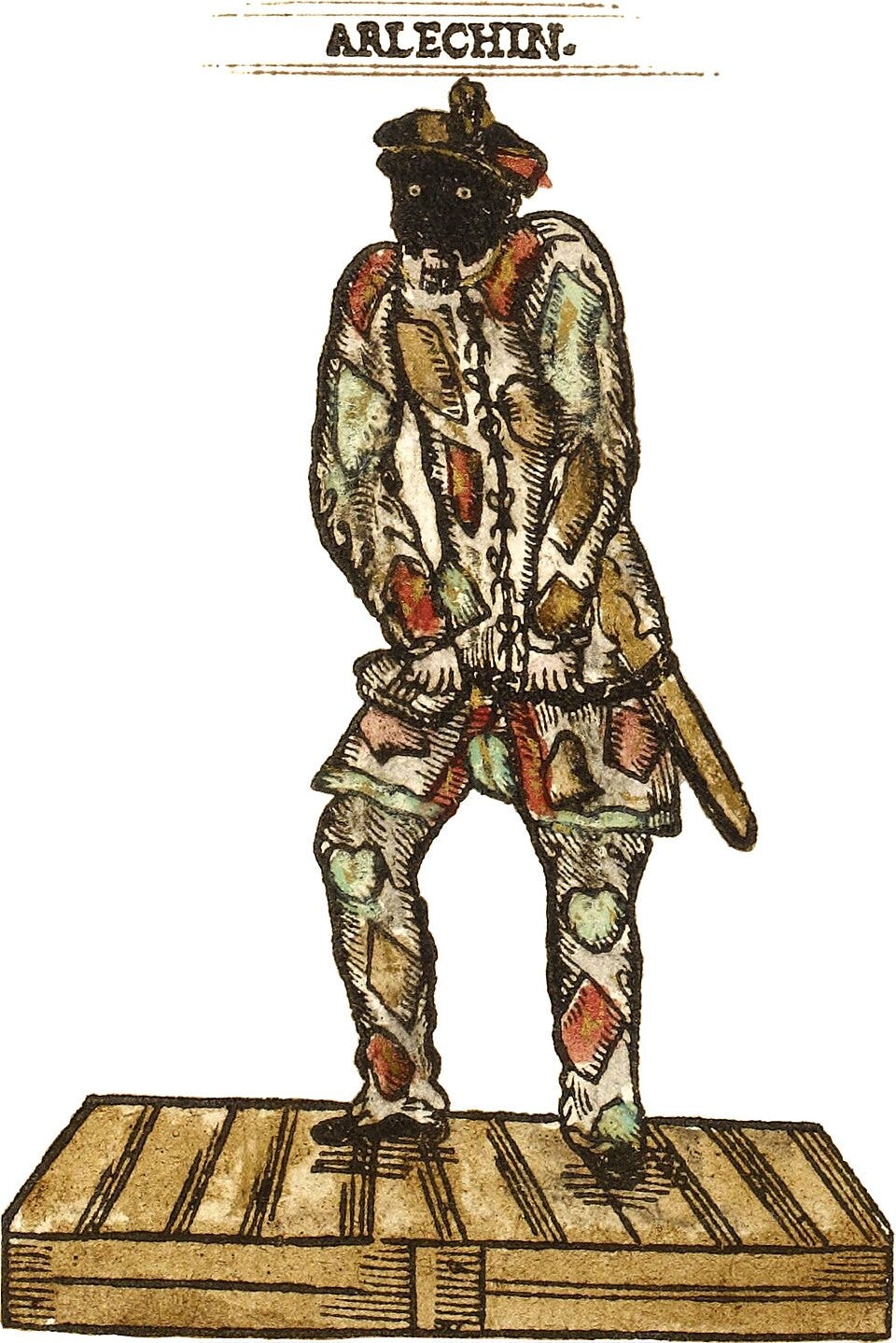
During the Renaissance, there was also the emergence of a new type of fool - one who might be a bit more malicious and figured into the trickster archetype vein. The harlequin - also known as the zanni or comic servant - may have evolved from the earlier Roman character as well as depictions of mischievous devils in the medieval passion plays. While dating back to France into the early 1500s, the first official actor who used the Harlequin character was Tristano Martinelli who performed the part in France in the 1580s before bringing it to Italy. His motley costume made of colorful patches, a half-mask, pointed beard, and hare-tail cap became one of the trademarks of the fool costume. These harlequin characters performed acrobatics and seemed to have mixed attributes as both simpletons and highly skilled tricksters. Harlequin soon made its way around Europe and into the pantomimes of Victorian England.
Fool folk traditions also often lent themselves to racial and ethnic stereotyping. Legends arose about the “Wise Men of Gotham,” a group of people from Gotham in Nottinghamshire who all feigned idiocy to avoid an expensive royal visit that would have bankrupted the town. English towns that had rivalries with each other often made the others into fools in the butts of jokes like the carles of Austwick, the people of Coggeshall, the gowks of Gordon, the people of Suffolk and Norfolk and most recently the Essex girl or Essex lad. Germans picked on the fictional Schildburgers, the Netherlands on the people of Kampen, and Latin American cultures on the people of Galicia. Polish jokes, Sardarji jokes, East Frisian jokes, and blonde jokes have all emerged in this vein.
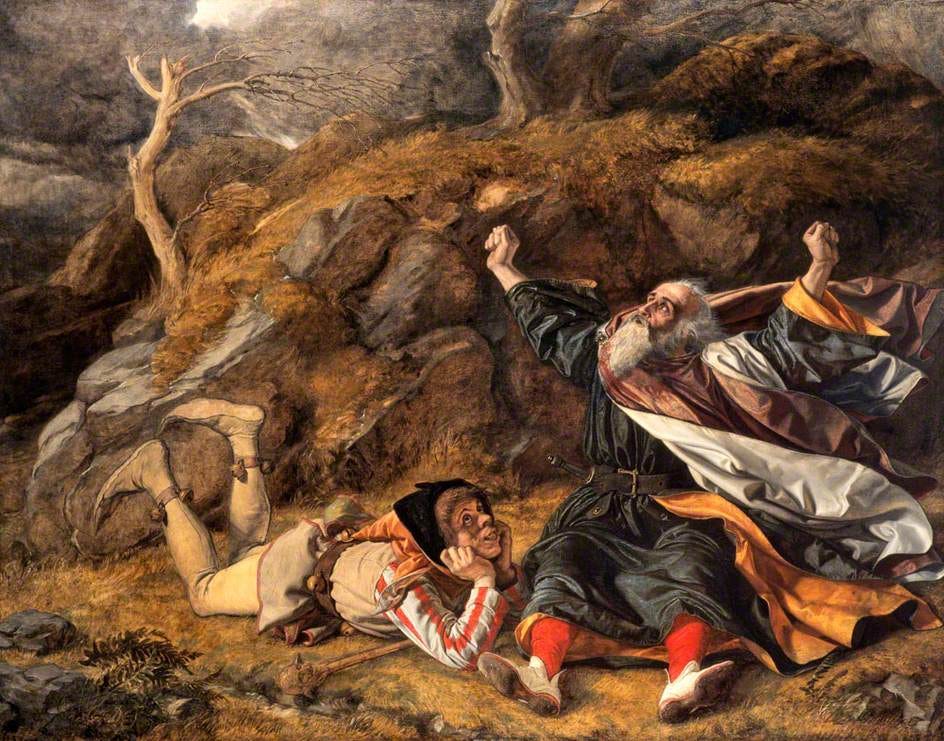
Shakespeare largely popularized another fool that has become a common archetype: the wise or clever fool. Just as the court jester could tell the truth without fear of angering the monarch, these fools in Shakespearean plays - perhaps most notably King Lear - either often predicted the truth before it happened or could told the truth that other characters wanted to ignore. The term “wisdom of the fool” identifies a literary paradox wherein the fool is the only bearer of wisdom, often with tragic consequences. This concept dates back to Greco-Roman works but was further evolved both by Shakspeare and Cervantes. The works of Erasmus, particularly his The Praise of Folly, also helped define this character.
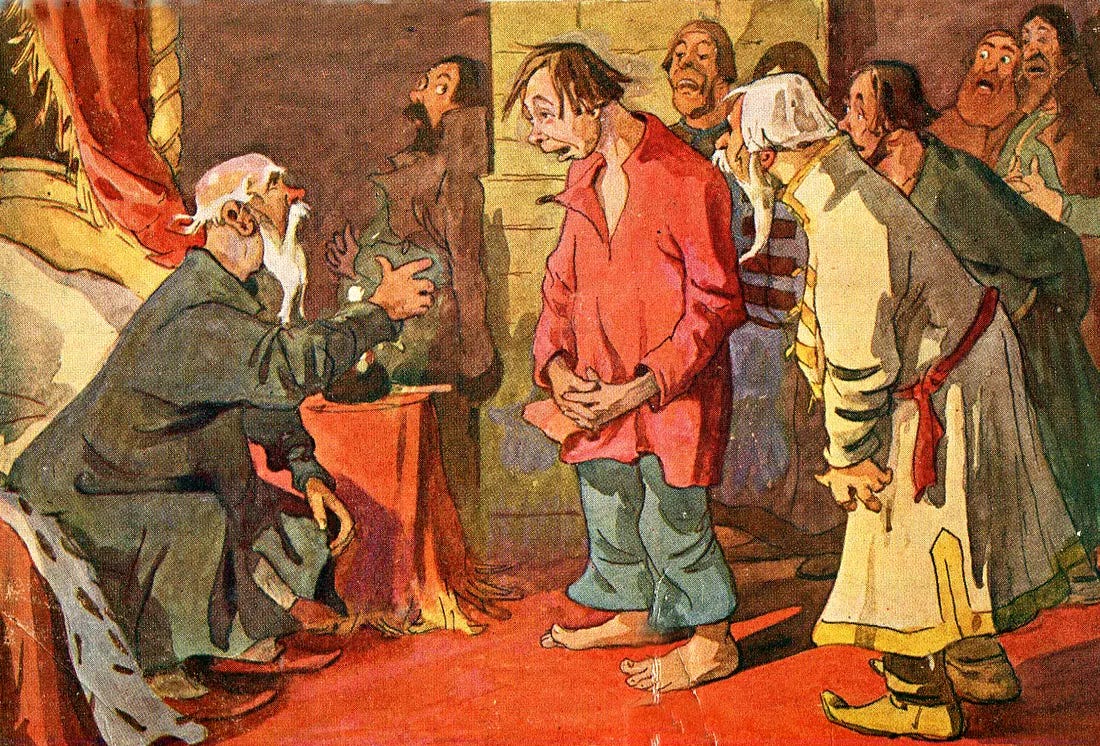
A second kind of fool credited to Shakespeare is a more comic character, a person of lower status who often outwits or outplays those of higher status. These figures were often used as comic relief, such as the Gravediggers in Hamlet, the porter in MacBeth, and Feste in Twelfth Night. This simple-minded peasant or commoner who uses their wits to outdo those of higher status is an archetype that bears some similarities to the trickster. Similar is the serendipitous fool, a simpleton who seems to have uncanny luck and always wins out in the end. This fool can be seen in folktales like those gathered by the Brothers Grimm as well as the Russian folk character of Ivan the Fool.
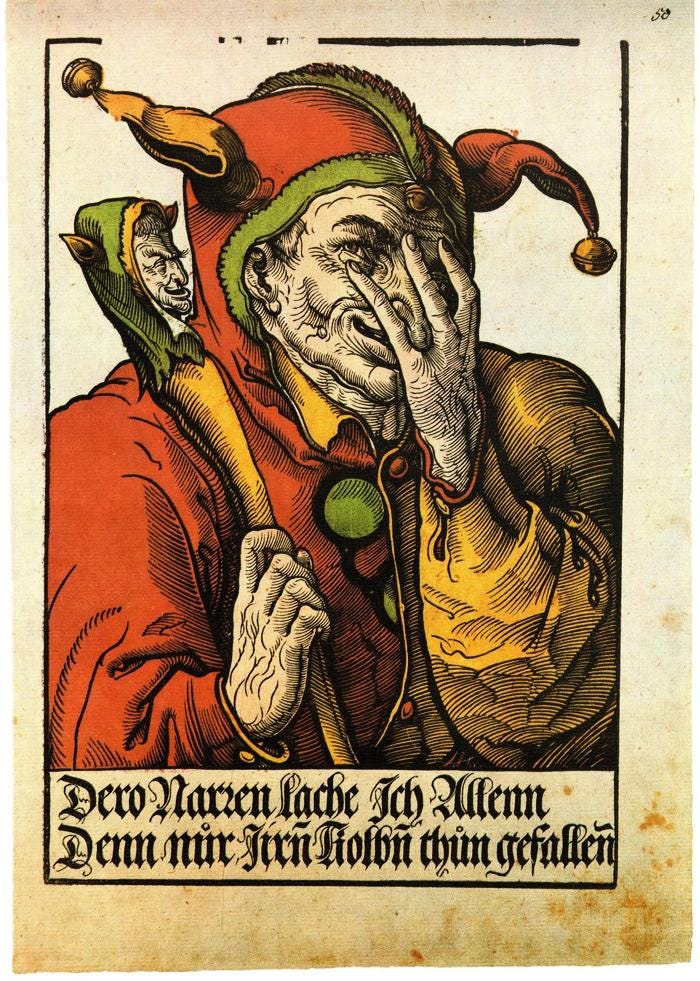
As the court fool began to retire in the 1600s, the performers who once satirized the nobility to their face moved to the streets. Rooted in the Italian comedies of the late 1500s, puppet shows like Punch and Judy started appearing at fetes and on street corners across Europe. A manifestation of folk characters like the Lord of Misrule and Trickster, these figures began to emerge as marionette shows in the 1660s with the puppets often wearing the jester’s motley or harlequin outfit. There was also a lot of “physical” comedy and slapstick between the puppets who would sometimes tell folktales and other times comically relate contemporary events. The tradition was spread throughout Europe under other names like France’s Guignol, Germany’s Kasperle, and Russia’s Petrushka.
Even in more modern times, folk culture around fools still exist. The Jewish subtypes of fools - the Schlemiel and Schimazl - helped create the archetype of the clueless character aided and abetted by the luckless one. These are also known as numbskull/noodlehead stories and can vary from the absent-minded professor to the numbskull who often serves as a mark for a trickster character or a straight man in the comedic scenario.

China’s Sichuan opera also developed several fool archetypes. There is the mangpao or emperor’s attendant, the fool in mandarin’s clothes, the playboy fool, the dirty fool, the old-fashioned fool, and the thief fool. The foolish thief has become one of the most popular stock characters in SIchuan opera, where stock characters appear in guises or masks to appear instantly recognizable.
The Dark Side of the Fool
One of the difficult things about literary fools is that many of the culturally-ingrained fools that make up literary tradition have roots that are less than savory. From the use of slaves as comic relief in ancient Roman literature to ethnic jokes that perpetuate cultural stereotypes to the blackface portrayals of characters like Amos ‘n’ Andy that reinforce racist tropes, the fool is a character that has often crossed over the line from literary archetype to harmful stereotype. Often used to pick on groups that are perceived as lesser or that are being villainized for social, cultural, political, or economic reasons, the portrayal of the fool as a certain othered group.
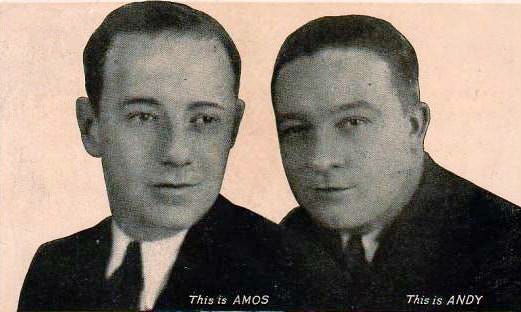
Perhaps the most common usage are the minstrel shows of America were slaves and freed African-Americans were portrayed often by white actors in blackface in racially-charged stereotypes. These shows were similar into the jester and Punch and Judy tradition in that they involved slapstick sketches and often parodied popular entertainment of events, but they usually featured characters as racial stereotypes, often portraying African-American characters as lazy, drunk, stupid, superstitious of science and technology, ignorant, and cowardly. These stereotypes often reinforced the values of Jim Crow America and made it hard for African-Americans to be taken seriously in post-Civil War society. Likewise, they also promoted racist ideology and sentiment in both overt and subtle ways among whites. Figures like the dandy, an urban black man from the North trying to rise above his social stature, as well as the wench, a light-skinned black woman who was overly sexualized, as well as the Uncle Tom and Mammy stereotypes are still felt today.
These minstrel shows began as far back as the 1600s and lasted well into the age of television and film. The BBC’s “Black and White Minstrel Show” was still airing in 1978. They also gave rise to other stereotyping such as yellowface in which Asian characters were portrayed stereotypically by white actors - such as Mickey Rooney in Breakfast at Tiffany’s - and brownface - when white actors portray Native Americans, Latinx peoples, Polynesians, Southeast Asians, and Middle Easterners. While not as common as black face, elements of yellowface, brownface, and ethnic characteristics of immigrant groups like Poles, the Irish, Jews, and Germans were also sometimes included as parts of minstrel shows.
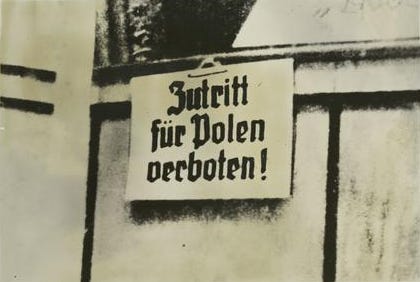
While some social and cultural groups have developed their own unique sense of humor, there is also ethnic humor that casts ethnic groups as the fool in various scenarios. The anti-semitic Jewish jokes and jokes about Poles came to prominence in America at a time when these peoples were immigrating to the country in large number, often to escape persecution in their homelands. The same way as they had done to the Irish and German, these groups became the butt of humor because they were seen as both culturally and economically threatening. They brought with them religion and culture that seemed foreign to the dominant Anglo-Saxon Protestant culture of the country and were often willing to take jobs at less cost and benefit to themselves than other Americans. As a result, they were often ridiculed as a way of taking away their power. We see this in racist caricatures like the Irish cop, the angry German, miserly characters often coded as Jewish, and even modern-day jokes about Latinx peoples.
The concept of the wise fool morphed into the modern-day idiot savant in films like Rain Main have also come under fire as using mental disabilities and neurotypical divergence to create unfair stereotypes and comic characters. Savant syndrome is actually a neurological disorder that affects both people on the autism spectrum, those born with brain defects, or those who have had brain injuries. This mix of extreme intelligence is often accompanied by intellectual disabilities. These characters are often socially awkward, which can be the butt of the jokes about them, though they are often the ones who have the knowledge that gets others out of situations. They are also often frequently used as pawns by other characters who take advantage of both their knowledge and the fact that they have disabilities.
Characteristics
The jester/fool archetype serves numerous purposes in literature. The character has a unique dichotomy in multiple ways. The jester can be the comic relief that brings lightheartedness to a serious text, the character that uses humor and satire to hold a mirror up to society and the other characters around them, or take on both roles at the same time. This character archetype can be both round and flat, dynamic and static. The fool character can also sometimes get away with doing things that defy sociocultural expectations, both as comic relief and as satire. Fool characters can also play into cultural literary archetypes but at the same time is a universal character often found in literature world wide.

Comic relief - As their name suggests on the surface, the fool or jester archetype is often the source of the comic relief in the story. The fool is sometimes the funny sidekick or the prankster in a group. Just like comedy itself, this source of comic relief can come from a variety of sources. The jester can be a master of observational humor, talented in wordplay, or engage in physical comedy -such as the character who has extreme luck despite their incompetence. This sub archetype of the comic relief character is the character who accidentally opens the secret door by leaning on something or who manages to accidentally fight off the big bad with a bucket over their head the whole time. No matter how bad things seem to be going, this character
Acts as Conscience - The fool or jester can also be the conscience of the hero - and even the villain. Because they like to tell a joke, they often have no qualms about saying anything and as a result, sometimes say what is on everyone else’s mind. The fool knows what the others are thinking or what the others should be doing. The tragedy is that because they are a fool, this character is often ignored when they do give sound moral advice. The fool can also use humor to mask hard truths.
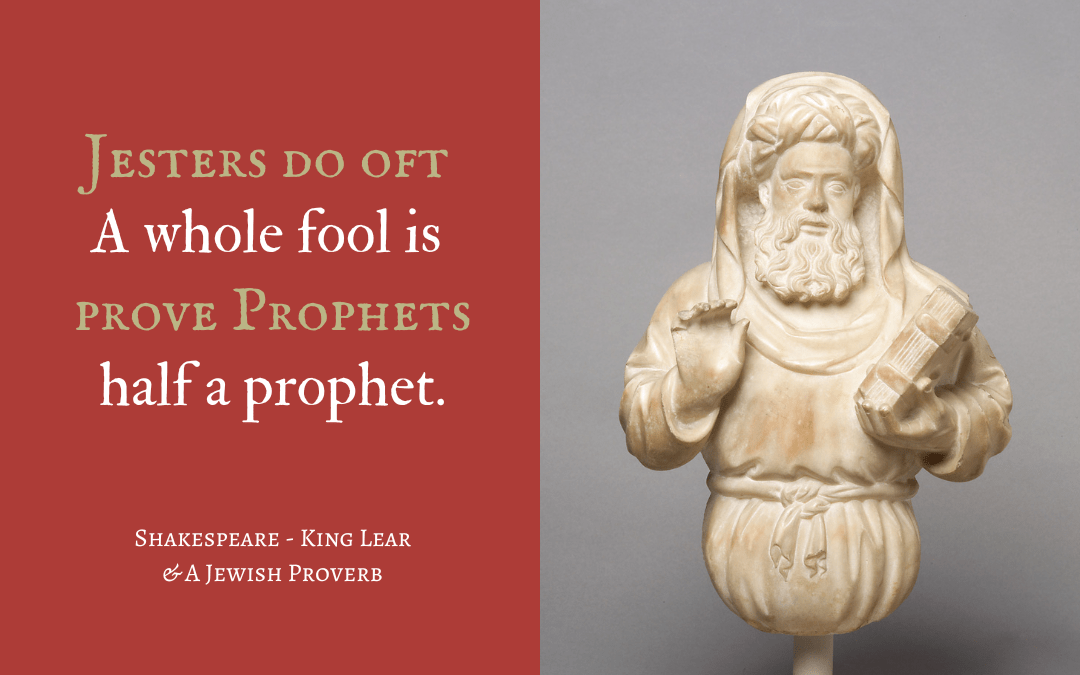
Prophetic Knowledge - Like the Fool in King Lear, the fact that the fool acts as the conscience of other characters can sometimes make the fool the bearer of prophecy. Taking hints from the wise fool and religious fool archetypes, this character seems to know what is going to happen before it happens but is largely ignored by the characters in play. This can be anything from the fool telling a joke that turns out to be a self-fulfilling prophecy in a comedic scenario - the old “well, it can’t get any worse” - to the fool who desperately tries to show others the truth to only be ignored.
Defy Social Conventions - Jesters and fools have long been character who can get away with things others cannot. The traditional fool was a commoner who entertained the wealthy, often by ridiculing them to their face. This could have gotten anyone else executed. The fool is a character who may be able to slip between social classes or castes, using their humor and talents as entree into areas that others of their ilk might not otherwise have access to. Likewise, the fool may be a melancholy character who defies our conventions of what a fool or jester should be.
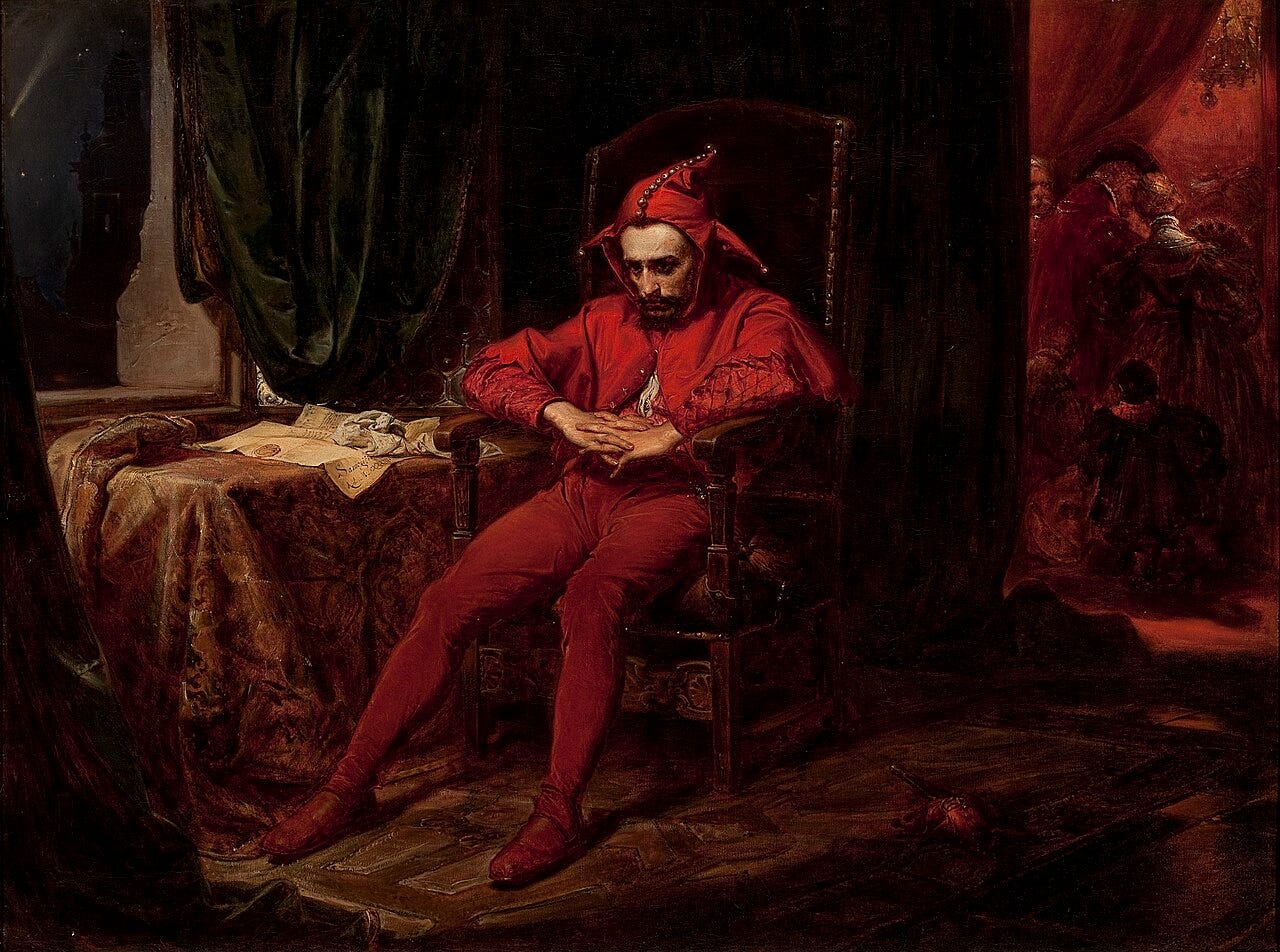
Childlike Innocence - One of the reasons why fools seem to get away with so much is that they always seem to have a sense of innocence about them - even if they seem to be the character most in the know. Fool and jester characters often find the fun in life like children and don’t take anything to seriously. The fact that they are considered empty-headed or too emotionally immature to understand complex topics by others might be one of the reasons they are able to get away with more than others.
Emotional Dichotomy - Fools are a paradox, an example of chaos. As a result, we often have a strange emotional dichotomy between the fools job - to entertain and dismiss fears and turmoil - and how they may actually be - melancholy characters burdened with foreknowledge of what is to come. We see this all the time in tropes like the comedian with a dark side, the sad clown, the humorist who suffers from depression. Sometimes, the ability to be humorous covers up something dismal on the other side. The fool may be full of laughter on the outside, but there is sometimes more going on inside.
Why We Write Fools
With its roots in racism, sexism, homophobia, and xenophobia, some may wonder if the value fool and jester characters have in literary tradition and their use as stock characters outweighs the harmful stereotypes the character is sometimes based in. What is important is striking a balance in providing a character that is comical and willing to tell the truth but who also doesn’t rely on harmful stereotypes. The goal of the fool is to be an archetype, an instantly recognizable stock character who feels familiar to an audience without grounding them in beliefs and characteristics that are dangerous.
Going back to ancient times, foolish characters have been used for satire, to lift a mirror up to society and show the inherent ridiculousness of the human condition or to critique ideas, to get society to think about topics in a new way. The fool can be used to poke fun at topics seen as taboo as well as get the ball rolling on discussions that we need to have. The fool can also be used to contrast wisdom and experience, to encourage both personal and societal growth. The fool is the starting point from which we all start on our journey to wisdom.
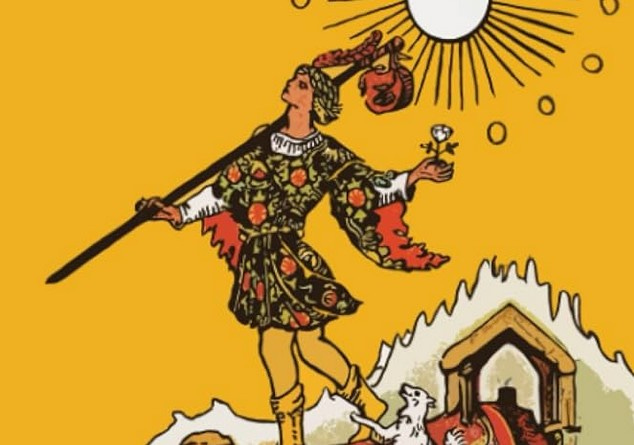
Both theorist Joseph Campbell and psychologist Carl Jung also present the fool not necessarily as a simpleton or idiot but rather as a perpetual optimist. Words like tenacious, confidence, persistence, and courage are among those they use to describe the archetype. The fool is willing to try new things and hope for the best, even to their own detriment on some occasions. The fool is the person who doesn’t carry an umbrella, even when rain is predicted, because they are holding out for sunshine. The fool can also approach situations with childlike wonder and earnestness.
And yet fools can also be dark and tragic characters. The fool may experience regret over past actions - or inactions - and often feels grief over when their truth telling or predictions are ignored. The tragic fool may find themselves the only person in a narrative who survives the horror around them, not because of any particular talent or ability but instead pure luck. This can then render survivor’s guilt in the character.
Fools can also sometimes be dark, just as the tragedy mask is the other side of the comic one. We all know the stories of comedians with dark sides, who had hidden lives or darkness within them that didn’t come out until the end. This villainous fool is terrifying in their unpredictability and chaos, though they can be counted on to be reckless and put others in danger for their own wicked desires and aims. Emotionally stunted and painfully cruel, these characters can showcase the worst in humanity as well.
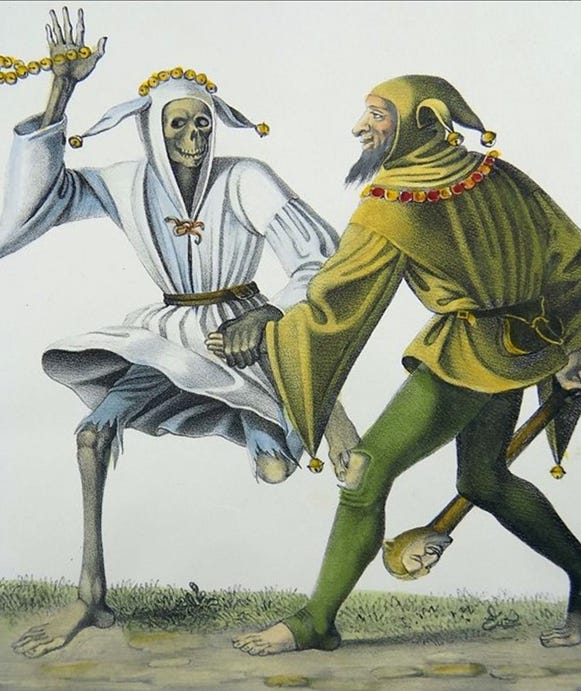
The fool can also offer insights into failure. The fool is the character who tries again if they don’t succeed. They are also the character who doesn’t let failure dampen their enthusiasm or discourage them from pursuing their dreams. The fool has dreams and goals, but doesn’t always take the straightest path to get to them. The fool is also about reinvention and adventure. Often times, the fool character can also morph into the sage or wise man character by the end of a narrative, their many failures and experiences leading to them gaining wisdom and experience.